How to Write a Cover Letter That Gets Read in 2026
Summary
To learn how to write a cover letter that gets read, start with the job description, not a blank page. Highlight three to five keywords, pick one achievement with a number, and build four short blocks: header, opening, one proof story, and a clear close. Match the company's tone, stay under 400 words, and run a keyword scan before sending. Most hiring managers still read these letters, so a tailored one pays off.
Here is how to write a cover letter in one paragraph: open with the exact job title and one result you have already delivered, mirror three to five keywords from the job description, spend your middle paragraph on a single story that proves you can do the work, and close with one clear next step. Keep it to one page, 250 to 400 words. That structure is what a recruiter can scan in six seconds and what an ATS can match.
I know that sounds almost too simple. It is. The hard part is not the structure, it is the discipline of cutting everything that does not serve the one role in front of you.
Do you still need a cover letter in 2026?
Short answer: yes, more often than the internet admits. A Resume Genius survey of 625 US hiring managers found that 83% read cover letters even where they are optional, and 49% said a strong letter can win an interview for a candidate they were unsure about. The same survey says 18% will drop an otherwise good candidate over a weak one.
That cuts both ways. A bad letter costs you, and a generic one is just a bad letter with better grammar.
When do you skip it? Only when the application form literally has no place to upload one and no email address to send it to. In every other case, a short letter is cheap insurance. During my own 60-application search, my response rate only moved when the letter stopped being a summary of my resume.
What goes into a cover letter before you type a word?
Most people open a blank page and start with "I am writing to apply for...". That is the wrong first move. Spend ten minutes on prep and the writing takes fifteen.
Print or paste the job description and do three things:
Highlight the three to five hard requirements that show up more than once. Those are your keywords.
Circle the one problem the role exists to solve. "Reduce churn", "ship the mobile app", "clean up the data pipeline".
Write down the one achievement of yours that matches that problem, with a number.
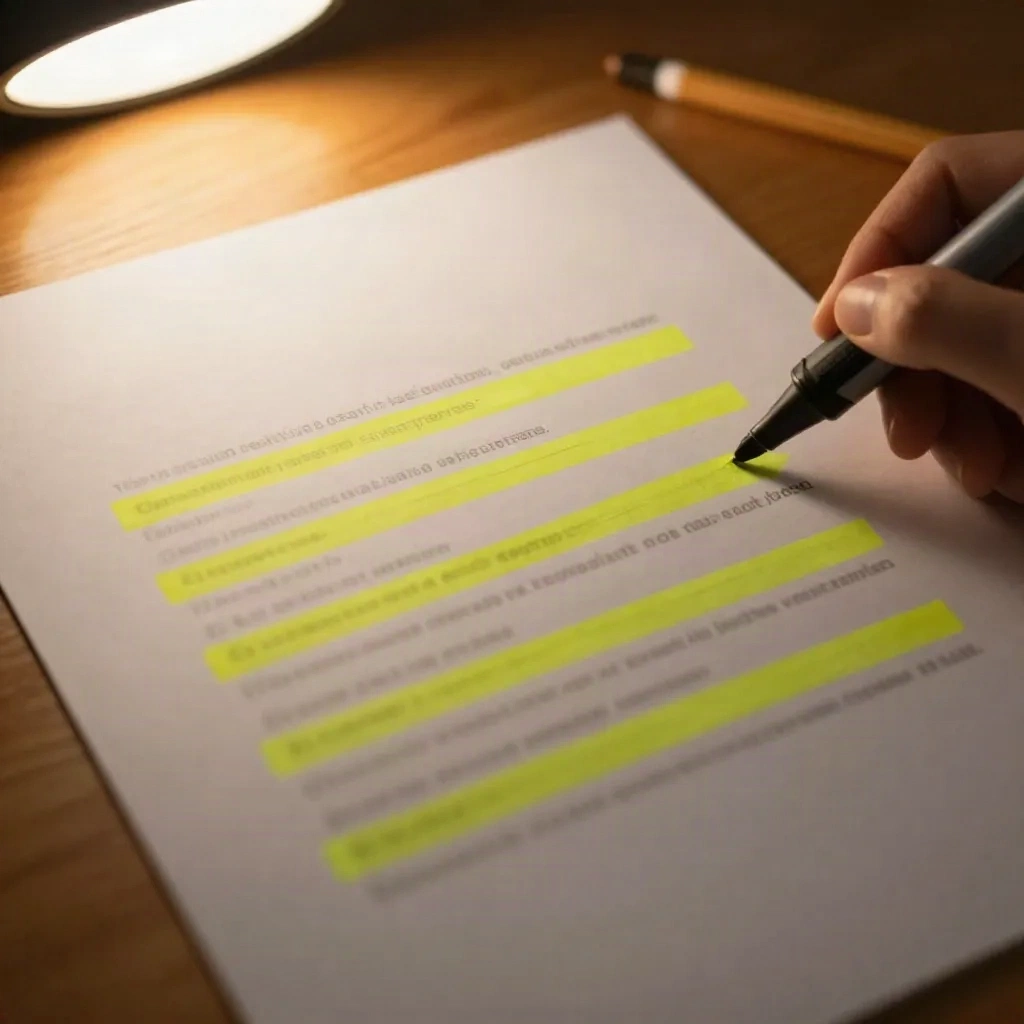
That is your whole letter, in three lines. Everything else is packaging.
A quick note on the machine side. Greenhouse, Lever and Workday parse your letter the same way they parse your resume, and a keyword scan against the job description is how most tools score you. An ATS does not read between the lines. A missed keyword is a missed filter.
How do you structure a cover letter paragraph by paragraph?
Four blocks. No more.
The header. Your name, city, email and phone, the date, and the hiring manager's name if you can find it. LinkedIn usually has it in two minutes. If you cannot find a name, "Dear Stripe recruiting team" beats "To whom it may concern" every time. For margins, fonts and file types, the cover letter format guide covers it in detail.
The opening (2 to 3 sentences). Name the role, name the company, and lead with your strongest relevant result. Not "I am excited to apply". Try this:
I'm applying for the Growth Marketing Manager role at Notion. Last year I took a B2B newsletter from 4,000 to 31,000 subscribers in nine months, and your JD says that's the job.
That version names the role, drops a number and mirrors the job description in 40 words.
The middle (one paragraph, 100 to 150 words). One story. Situation, what you did, what changed. The mistake I see most is the "tour of my resume" paragraph where every job gets a sentence. Pick one. If the role has two separate requirements, use two short paragraphs, but never three.
The close (2 sentences). Say what you want next and make it easy. "I'd like 20 minutes to walk you through the plan I'd run in the first 90 days. I'm free Tuesday and Thursday afternoons." That is a call to action. "I look forward to hearing from you" is a shrug.
Here is the skeleton if you want something to paste into a blank doc:
Line 1: role + company + one number.
Paragraph 2: the story that proves the number.
Paragraph 3: why this company, in one specific sentence (a product, a launch, a policy, not "your culture").
Closing line: the next step.
How do you match the company's tone without sounding fake?
This is where letters usually go flat. A fintech startup, a hospital system and a bakery all hire, and each reads a different register as competent.
Read the careers page, the last three LinkedIn posts from the company, and the JD itself. Count three things: sentence length, how formal the greetings are, and whether they use "we" or "you". Then match, lightly. You are tuning the volume, not doing an impression.
Here is what that looks like on the same achievement:
Startup (Series A): "I grew a newsletter from 4k to 31k in nine months with a referral loop and two paid experiments. Happy to share the numbers."
Hospital or university: "In my current role, I increased subscriber engagement from 4,000 to 31,000 over nine months through a structured referral program."
Local bakery or small shop: "I've built an audience of 31,000 people from scratch. I'd love to do the same for your regulars list."
Same fact, three different letters. If a job description says "we're a scrappy team" and your letter opens with "Dear Sir or Madam", you have already told them you did not read it.
My own numbers make the point. Version 1 of one letter scored 38% against the job description. By version 3, after I mirrored the language and cut a paragraph, the same experience scored 71%. Nothing about me changed. Only the match did.
What do you write when you have no experience, a gap, or a career change?
The structure stays. The story changes.
No direct experience. Use a project, a volunteer role, a class, a side hustle. "I ran the booking calendar for a 40-person community choir for two years" is a real operations story. Do not apologise in the letter. Never write "although I lack experience".
A career change. Lead with the bridge, not the past. Your first sentence should connect the old field to the new one: "Six years of ER nursing taught me to triage 30 problems at once, which is the daily job of a customer support lead." Then give one example.
An employment gap. One sentence, factual, forward-looking, or nothing at all if the gap is under six months and the resume already shows dates. "I took 14 months out for caregiving and spent the last three on a UX certificate and two portfolio projects" is plenty. Then move on. Oh, and yes, the rejections hurt. A letter that explains three years of feelings gets read less than one that says what you will do on day one.
If you want to see these structures in finished form, the annotated cover letter examples show four real letters with the choices marked.
Which mistakes get a cover letter skipped?
Skip these. All of them show up in my pile again and again.
Starting with "I am writing to apply for". The recruiter already knows. Use the line for a result.
Repeating the resume. If every sentence in your letter exists on page one of your resume, delete the letter and send the resume.
Going over one page. Past 400 words, the reader starts skimming, and a skimmed letter is an unread letter.
One letter for 20 jobs. In a 2020 ResumeGo survey, 78% of hiring managers said it is easy to tell when you have not tailored your letter. Swap the company name only and you will get the response rate you deserve.
Unsupported adjectives. "Hard-working", "detail-oriented" and "team player" prove nothing. A number or a story does.
A weak last line. The ending is what they remember. If yours is a sigh, see how to end a cover letter for five closings that get replies.
Should you use AI to write it, and what about the final check?
You can. I do, for first drafts. But a model with no context writes the same letter for everyone, and recruiters see that letter fifty times a week. Give the tool your achievement, the JD and the company tone notes, then rewrite the opening and the close by hand so they sound like you.
Whatever wrote the draft, run the same checklist before you hit send:
Does the first sentence contain the exact job title and a number?
Do at least three JD keywords appear naturally?
Is the company name spelled right, everywhere, every time?
Is it under 400 words and on one page?
Can you read it aloud without running out of breath?
Then score it. A resume and cover letter builder gives you structure fast, and an ATS scanner shows what the filter will see.
My honest pick for most people: write the draft yourself in 20 minutes using the prep above, then use a scanner for the last 5. Worth the splurge only if you apply to more than ten roles a month.
What should you do in the next 30 minutes?
Pick one job you actually want. Highlight the five keywords. Write your one-line achievement with a number. Draft the opening in two sentences and send nothing yet.
Tomorrow morning, add the story paragraph, then the close. Test, measure, adjust. That is job search, not poetry. The first letter will be rough, the third will be good, and the tenth will take you fifteen minutes.