Summary
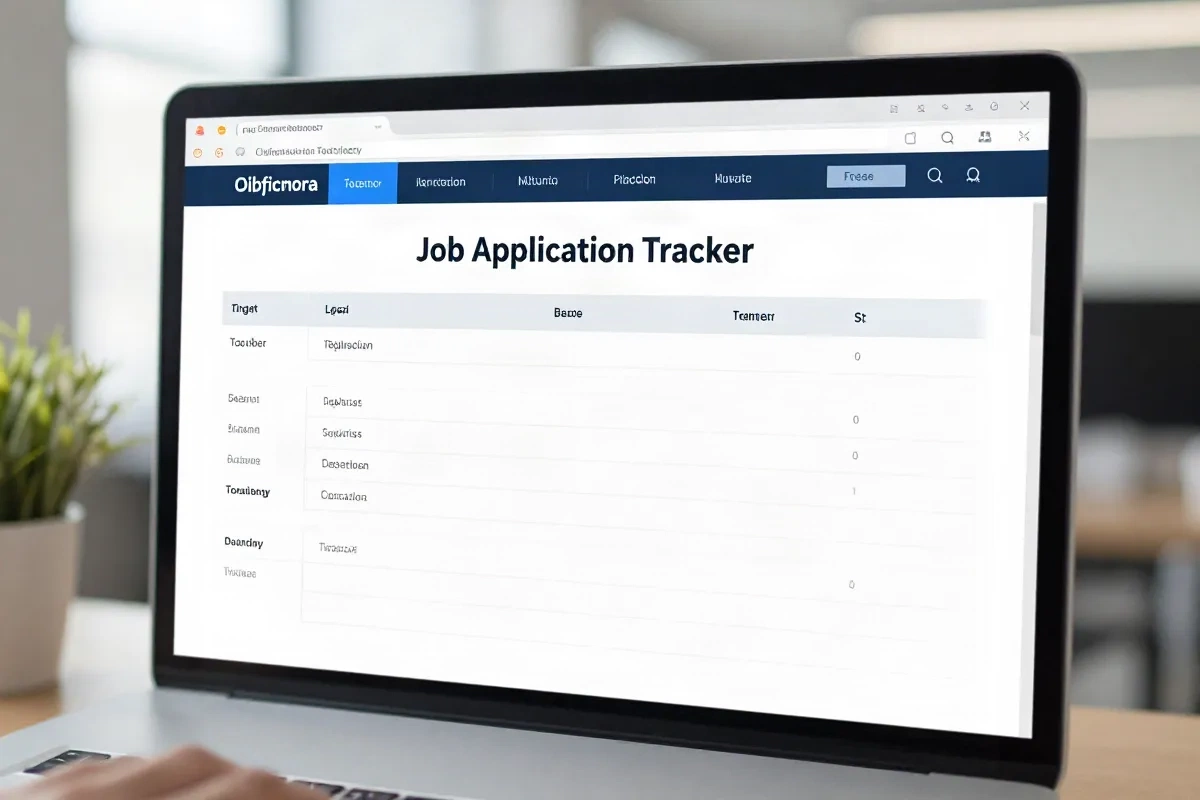
This job application tracker is a free browser tool for anyone actively job searching. Log the company, role, date applied and status for each application, and the tracker calculates your response rate and interview rate live, no math required. Applications still marked Applied after 7 days get an automatic follow-up flag, so you know exactly when a check-in email is due instead of guessing. Everything saves to local storage in your browser, nothing is sent to a server, and there is no signup. Update a status or delete an entry and every stat recalculates instantly, turning a messy spreadsheet into a clear read on what is actually working in your search.
A Job Application Tracker You'll Actually Use
Log every company, role, and status in one place. Get your real response rate instead of a guess, and a flag the moment it's time to follow up.
What this tracker actually does
Log applications in seconds
Company, role, date, status. Four fields, no setup, no account to create. Every entry saves to this browser the moment you hit add, and it's already there the next time you open the page.
Get a follow-up flag automatically
Any application still marked Applied after 7 days gets flagged in your list. That's roughly how long it takes to clear an ATS and land on a recruiter's desk, so it's a reasonable point to send a short check-in email instead of waiting and wondering.
See your real conversion numbers
Response rate and interview rate update live as you log entries, no formulas to write. 12 applications and 3 interviews is a 25% interview rate, not a feeling, and it tells you fast whether your current cover letter and targeting are working.
From first application to first follow-up
-
1
Add your first application
Type the company, the role, the date you applied, and pick a status. It takes about ten seconds per entry.
-
2
Keep logging as you apply
Add a new row every time you send a cover letter. The dashboard above the list updates on every entry, no refresh needed.
-
3
Watch for the follow-up flag
Once an entry hits 7 days at Applied, it's flagged. That's your cue to send a short, specific follow-up, not a generic bump.
-
4
Update the status as things move
Interview scheduled, offer made, or rejected: change the status inline and your response rate and interview rate recalculate immediately.
Common questions
Is this job application tracker free?
Where is my data stored?
What counts as a response?
How do you decide when to flag a follow-up?
Can I track which cover letter version I used for each application?
Will I lose my data if I clear my browser cache?
Does this replace a spreadsheet?
What's a good response rate to aim for?
Can I export my applications?
Your tracker shows the gaps. Your cover letter fixes them.
If your response rate looks low once you've logged a dozen applications, the letter is usually the fastest fix. Write one that matches the job description in minutes, no blank page, no generic template.