Manus AI Alternatives: 4 AI Agents for Job Seekers
Summary
Manus AI is a fully autonomous agent, but its credit-based pricing and 20-task concurrency cap send job seekers looking for manus ai alternatives. This comparison tests four real options for job-search tasks: company research, portfolio decks, and application prep. Genspark comes closest to Manus's browse-and-execute autonomy. Skywork builds cited research decks and portfolio visuals. Flowith offers real multi-step autonomy from $19.90 a month. Suna is the open-source, self-hosted pick for technical candidates who want full control.
Looking for real manus ai alternatives? Genspark is the strongest all-around pick if you want one agent that browses, calls, and produces finished files without hand-holding. Skywork wins for building interview-ready decks and portfolio assets. Flowith is the best value for real multi-step autonomy under $20 a month. Suna suits candidates who want a self-hosted, open-source agent they fully control. Manus still leads on raw autonomy, which is exactly why its price and concurrency limits push people toward these four.
Why job seekers end up searching for Manus AI alternatives
Manus is a fully autonomous AI agent: it works inside a real browser, terminal, and file system, plans a multi-step task, and hands back a finished file instead of a chat reply. For a job search, that means asking it to research a company's last three funding rounds, pull recent product launches, and build a one-page briefing before an interview, without you clicking through ten tabs yourself.
The catch is concurrency and cost. Manus runs on credit-based tiers (roughly 4,000 to 40,000 credits a month across Basic, Plus, and Pro), caps you at 20 concurrent tasks even on paid plans, and doesn't publish a static price list, you have to visit the live pricing page to see current rates. Since Meta's 2026 acquisition of the startup, pricing and roadmap questions have only gotten harder to answer from the outside. That's the gap these four tools fill.
What each tool is actually for in a job search
None of these are cover letter writers or ATS scanners like Jobscan or Teal. They're general task-execution agents. The realistic job-search uses are: company research briefs before an interview, building a portfolio site or slide deck, turning a messy set of notes into a clean document, and automating repetitive research across a long list of target employers.
How I compared them
I checked each vendor's own pricing and product pages against independent reviews and comparison write-ups published in the first half of 2026, then scored four things: published or credibly reported pricing, how much autonomy the agent actually has (does it browse and execute, or just plan), what output formats it produces, and whether your data stays on your own infrastructure or a vendor's cloud. See the methodology note below for what this comparison does and doesn't cover.
Genspark: the closest all-around Manus alternative
Genspark markets itself as a no-code Super Agent: one prompt can trigger web browsing, phone calls, and generation of slides, docs, images, video, or code. For a job search, that means it can call a company's front desk to confirm a role is still open while it drafts your interview brief in the same session, a level of unsupervised execution closer to Manus than anything else on this list.
The free tier reportedly caps out around 100 to 200 credits a day, which is thin for a heavy research day, and paid plans run from about $19.99 a month up to roughly $200 for concurrent-task-heavy use. Genspark also hides its exact current pricing grid behind an account login, so treat published numbers as approximate until you check the live page.
Skywork: best for portfolio decks and interview material
Skywork isn't a browser-and-terminal agent like Manus. It's seven specialized agents, images, slides, documents, spreadsheets, websites, videos, and podcasts, built around a single workspace. The part that matters for a job search: its Deep Research slide mode pulls citations from Google Scholar and Wikipedia, which is genuinely useful for building a data-backed "why this company" deck ahead of a final-round interview.
Pricing starts free with limited generations, and Pro runs about $12 to $16 a month. Layer Splitting lets you edit AI-generated images like Photoshop layers, handy for polishing a portfolio site's visuals without a design background. The honest limit: it won't run an open-ended web task the way Manus, Genspark, or Suna can.
Flowith: the cheapest real multi-step agent
Flowith runs its Oracle and Neo agents on an infinite-canvas workspace, so a research task branches out visually instead of scrolling endlessly in a chat thread. Starter is free, Pro is $19.90 a month with 20,000 credits and up to 50 concurrent tasks, and heavier Ultimate and Infinite tiers scale up from there.
For a job seeker running parallel research threads, say, comparing five target employers side by side, the branching canvas keeps each thread visible instead of buried in scrollback. The visual layout takes a session or two to get used to if you're expecting a plain chat box.
Suna: the open-source, self-hosted option
Suna, built by Kortix, is the closest open-source answer to Manus: a generalist agent with real browser, shell, and file access, backed by roughly 20,000 GitHub stars. The core software is free and self-hostable, you bring your own LLM API keys and infrastructure, and Kortix also runs a managed hosted version for teams that don't want to run the stack themselves.
That flexibility comes with setup work. This is the pick for a candidate with a technical background (data, engineering, product) who wants to own the agent outright rather than rent one, not for someone who wants results in the next ten minutes.
Worth a mention: Perplexity Comet
If the job is closer to "research five companies fast" than "build me a finished document," Perplexity's agentic browser, Comet, is worth a look on its own. It isn't part of this head-to-head because it's built specifically for browsing and answering, not multi-format file generation, but it's a fair third option if a full agent workspace is more than you need.
Which one should you actually use?
If you want the closest match to what Manus does, pick Genspark and budget for the paid tier once the free credits run out. If the job in front of you is a portfolio site or an interview deck, Skywork gets you there faster and cheaper. If you want real agent autonomy without committing $50 to $200 a month, start with Flowith's $19.90 Pro tier. If you're technical and want full control over your data and model choice, self-host Suna.
None of these replace the work of tailoring your actual application, matching a job description's keyword scan still comes down to a tool built for that specific job, not a general-purpose agent. Use the agent to do the research and asset-building; use a dedicated ATS tool for the letter itself.
At-a-glance
| Genspark | Skywork | Flowith | Suna | |
|---|---|---|---|---|
| Pricing | Free tier (~100-200 credits/day); paid plans from $19.99/mo up to ~$200/mo | Free tier (limited generations); Pro ~$12-16/mo, annual discount available | Free Starter; Pro $19.90/mo, Ultimate $49.90/mo, Infinite $499.90/mo | Free and open source if self-hosted (bring your own API keys); paid hosted plan via Kortix |
| Task autonomy | No-code Super Agent chains web browsing, phone calls, and file generation from a single prompt | Task-specific agents per output type (docs/slides/sheets); less open-ended than Manus | Oracle/Neo agents run multi-step tasks on a branching canvas, up to 50 concurrent tasks on Pro | Open-source generalist agent with full autonomy; you configure the model and infrastructure |
| Browser / computer use | Yes: live web browsing plus phone-call automation | Limited: citations pulled in Deep Research mode, no general browser control | Yes: browser-based research inside the canvas workflow | Yes: browser, shell, and files, self-hosted or via Kortix's managed runtime |
| Best output formats | Slides, docs, images, video, and code in one workspace | Docs, slides, sheets, websites, videos, podcasts (7 specialized agents) | Research docs, slide decks, simple websites, branching idea maps | Code, research reports, automated workflows (developer-oriented output) |
| Hosting / data control | Cloud-only SaaS | Cloud-only SaaS | Cloud-only SaaS | Self-hostable open source (~20,000 GitHub stars) or Kortix-managed cloud |
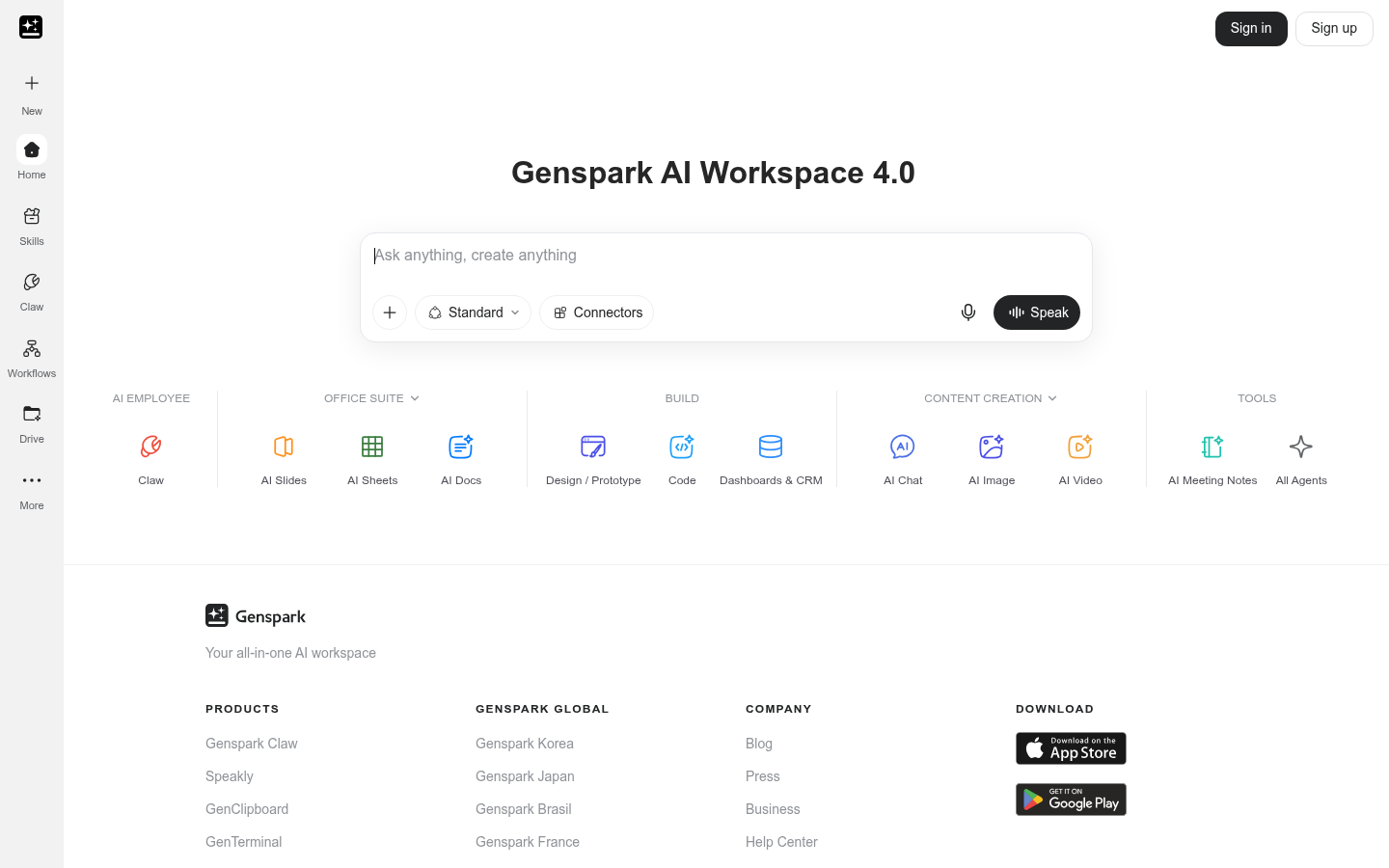
Genspark
- Runs full multi-step tasks unsupervised, not just single-turn browsing
- Combines phone-call automation with web research and document, slide, and video generation in one thread
- Free tier lets you test the Super Agent before paying anything
- Community-reported credit limits, roughly 100-200 a day on the free tier, make heavy research days tight
- Official pricing grid sits behind a login wall, so exact plan costs are hard to verify upfront
Closest like-for-like Manus alternative for broad, unsupervised task execution.
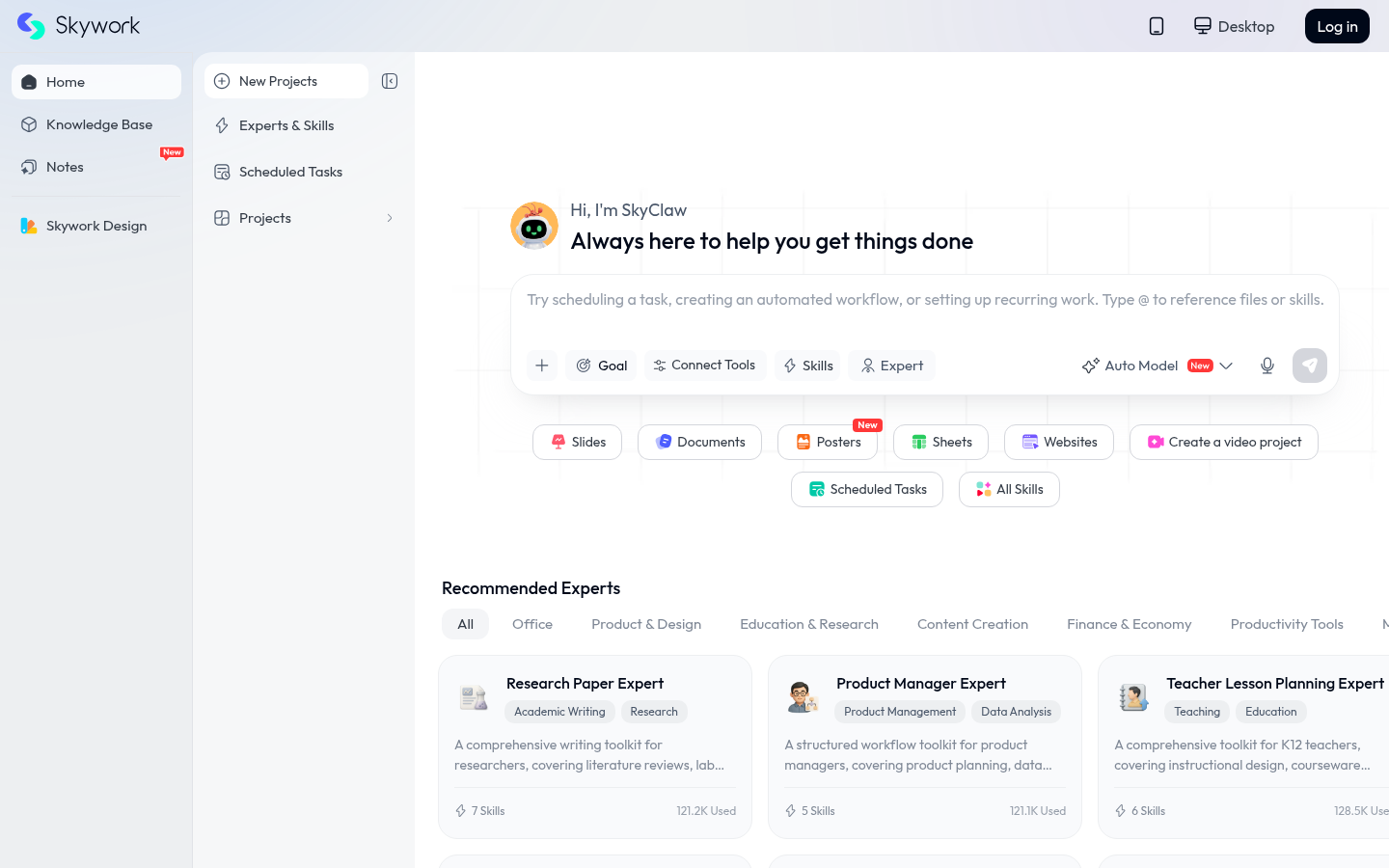
Skywork
- Deep Research slide mode cites real Google Scholar and Wikipedia sources, useful for company research decks
- Nano Banana Pro image quality beats most standalone AI image generators for portfolio visuals
- Layer Splitting gives Photoshop-style editing on AI-generated design assets
- Not a general browser or terminal agent, so it cannot replace Manus for open-ended web tasks
- Website generation is MVP-quality and won't replace a dedicated builder like Webflow
Best pick when the job is building application assets, not running open-ended agent tasks.

Flowith
- Pro plan starts at $19.90 a month with 20,000 credits and up to 50 concurrent tasks
- Infinite-canvas layout keeps branching research threads visible instead of buried in chat history
- Oracle and Neo agents handle research, slide decks, and simple websites end to end
- Visual canvas has a learning curve compared to a straightforward chat interface
- Higher tiers, Ultimate and Infinite, get expensive fast for a solo job seeker
Good value pick if you want Manus-style autonomy without the higher price tag.
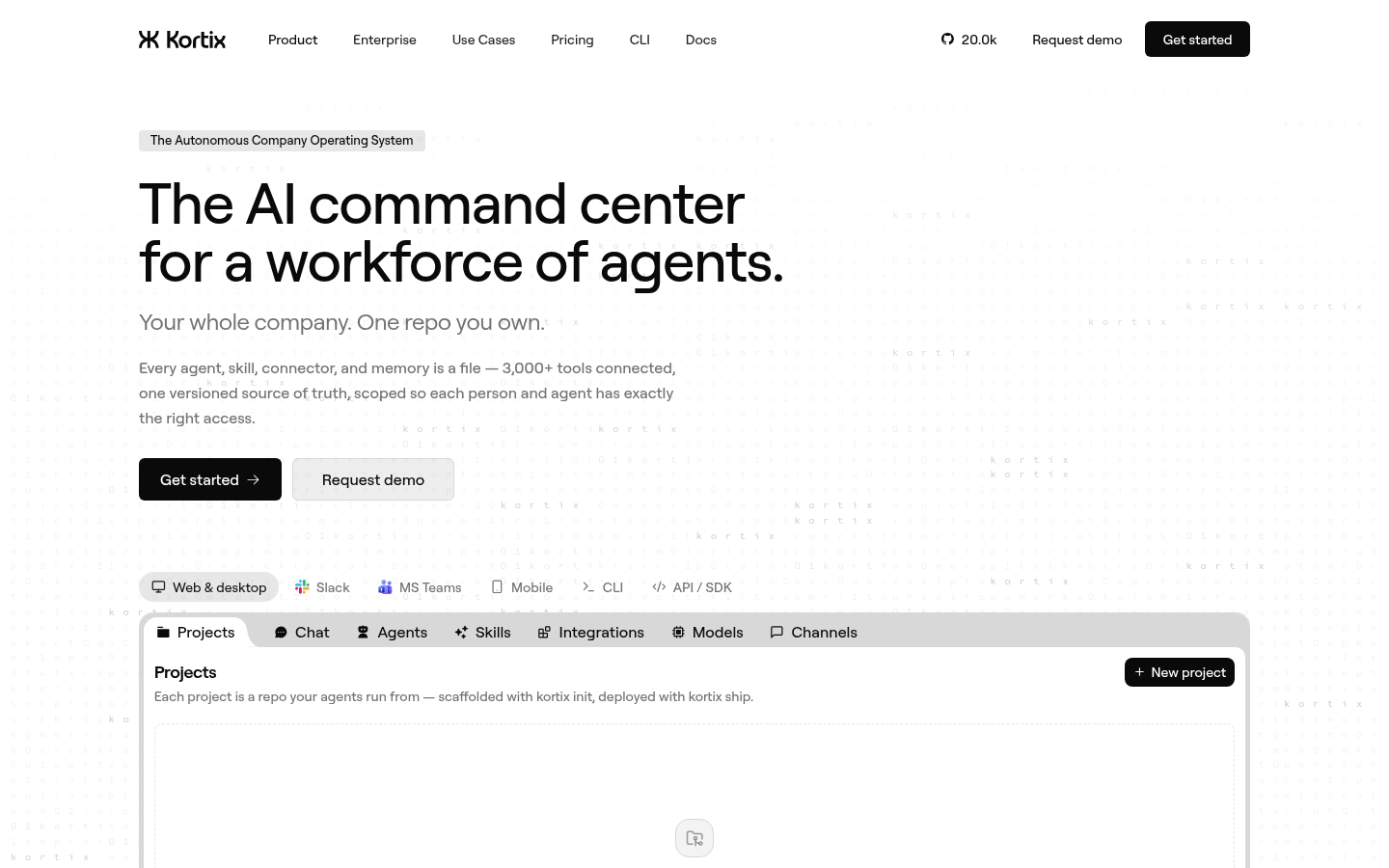
Suna
- Fully open source with around 20,000 GitHub stars and an active contributor community
- Self-hostable, so you control the model, the infrastructure, and the data end to end
- Kortix's managed hosted version exists for anyone who doesn't want to run the stack
- Self-hosting requires real technical setup, not a fit for a non-technical job seeker in a hurry
- Real cost shifts to compute plus whichever LLM API you connect, harder to budget than a flat subscription
Best for technical candidates who want an agent they fully own, not a managed SaaS.
Verdict
Genspark is the pick if you want the closest match to Manus's browse-and-execute autonomy without paying Manus's price. Skywork is the better tool when the job is building a portfolio site or an interview deck rather than running an open-ended research task. Flowith gives you genuine multi-step autonomy from $19.90 a month, the cheapest entry point on this list. Suna is for technical candidates who want to self-host and fully own their agent. None of these four replace a dedicated ATS tool for the cover letter itself.
How we tested
I compared Manus against four widely cited alternatives, Genspark, Skywork, Flowith, and Suna, using each vendor's own pricing and product pages, plus independent reviews and comparison write-ups published in the first half of 2026 (aiagentstore.ai, Taskade, Vellum, and vendor blogs). For each tool I checked four things: published or credibly reported pricing tiers, actual autonomy level, whether it browses and executes unsupervised or just plans and chats, documented output formats, and hosting or data-control model, cloud-only SaaS versus self-hostable. I did not run identical job-search prompts through paid tiers of all five tools due to cost, so scores reflect a documentation and third-party review audit rather than a hands-on, task-by-task benchmark. Screenshots were captured directly from each product's live homepage in July 2026.